📊 Executive Summary
🎯 Mission Focus
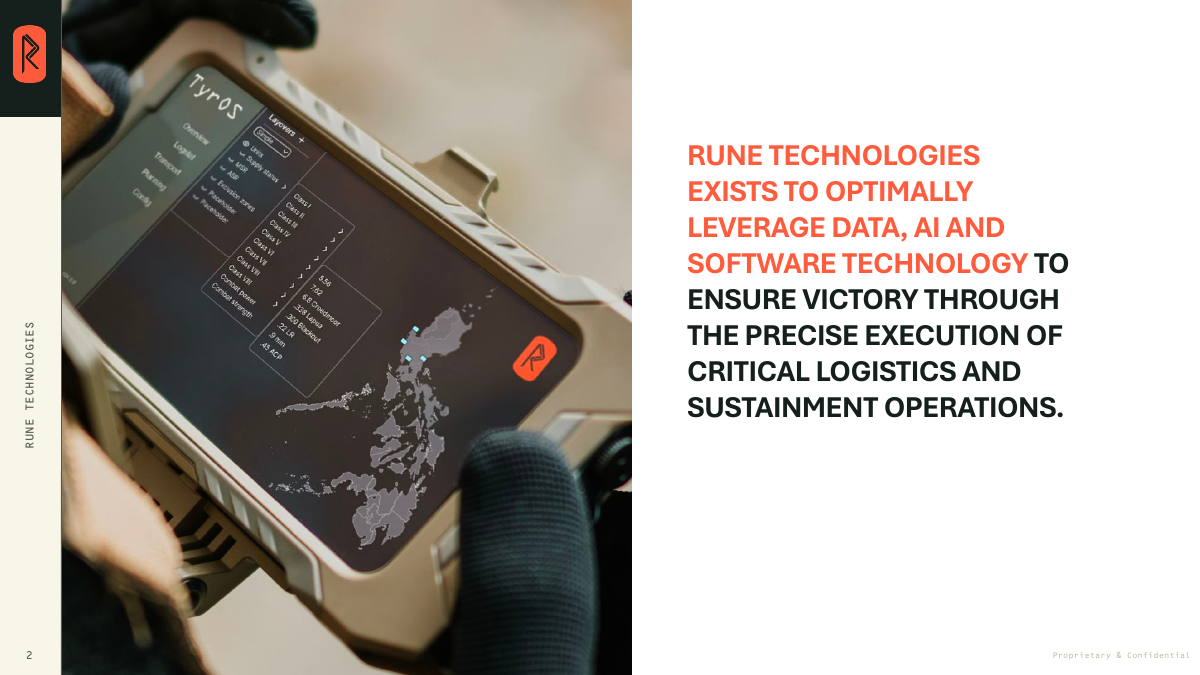
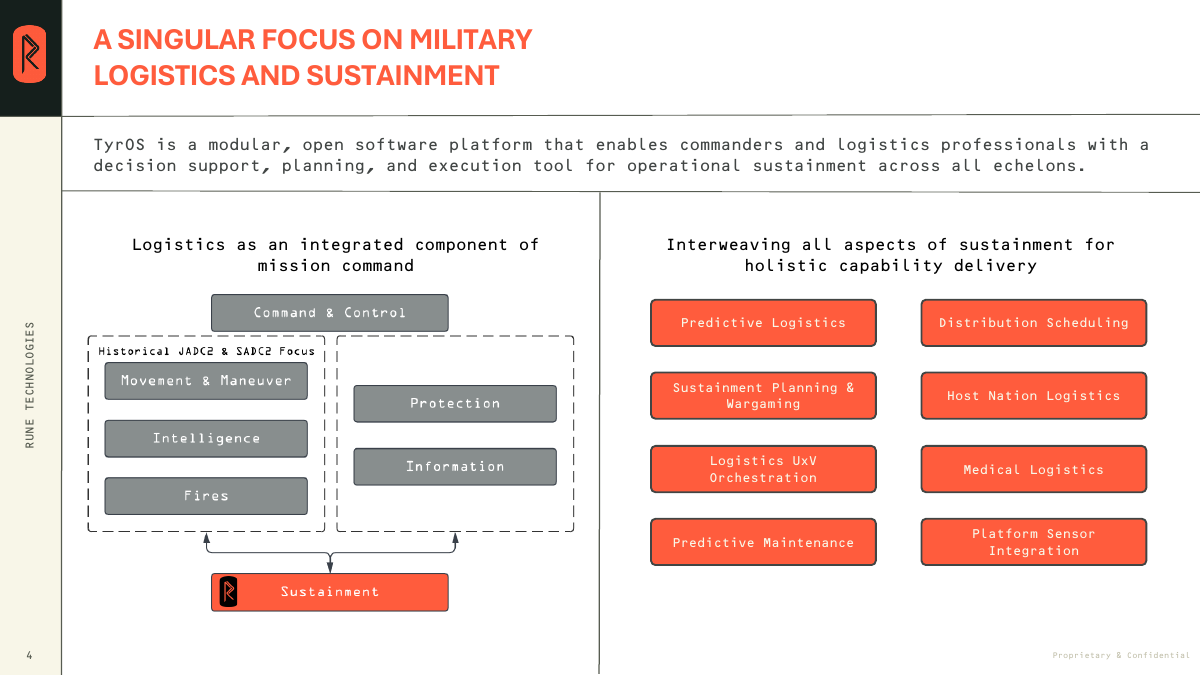
Project Rampart (founded 2024, Arlington VA) exists to modernize military logistics and sustainment — this is their sole mission, not an afterthought or secondary business focus.
🎖️ Leadership
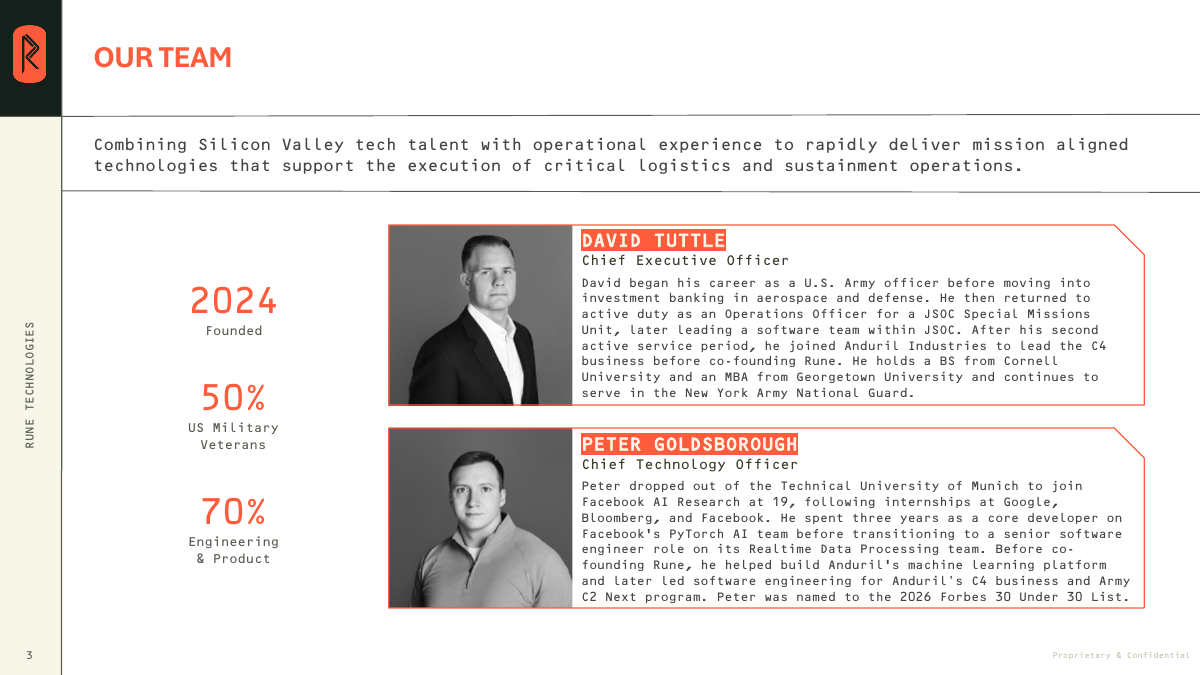
David Tuttle — CEO
Former JSOC Operations Officer, led Anduril C4 business. Cornell BS, Georgetown MBA. Continues to serve in NY Army National Guard.
Peter Goldsborough — CTO
Facebook PyTorch AI core developer at 19, led Anduril ML platform. Forbes 30 Under 30. Technical University of Munich dropout.
Kyle Haire — Head of Growth
20-year USMC F/A-18 WSO, Naval SWDG, built Anduril's $100M+ qualified pipeline. Virginia Military Institute BS, George Mason MBA.
📈 Traction Highlights
- Production deployments: 1st Cavalry Division, 25th Infantry Division (4th Infantry joining post-PCC6)
- First "SOF-peculiar" sustainment C2 application (SOF Week validation)
- Marine Corps Project Dynamis (PACOM Balikatan 26 exercise — "extremely positive reviews")
- Air Force SBIR Phase 1 for Agile Combat Employment (ACE)
- GCSS-Army write-back approval nearing completion (property accountability integration — significant trust signal)
🏗️ TyrOS Platform Architecture
💡 Core Insight
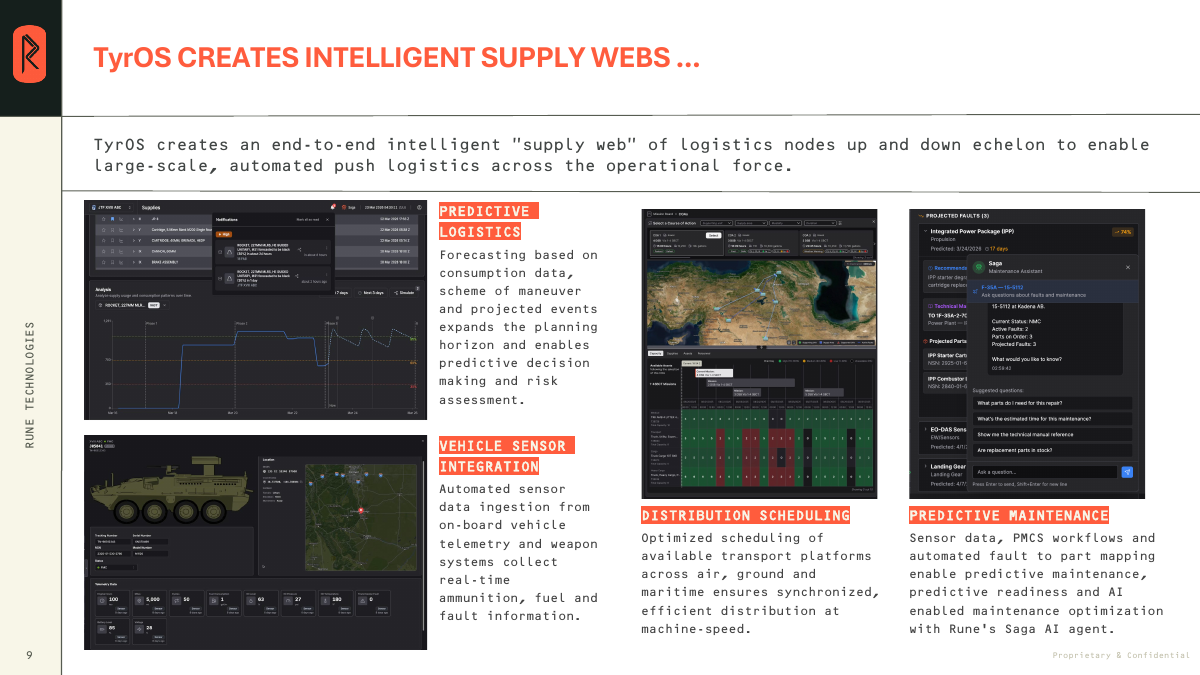
TyrOS is a modular, distributed software platform for operational logistics, enabling management of all pillars of sustainment across tactical and operational echelons.
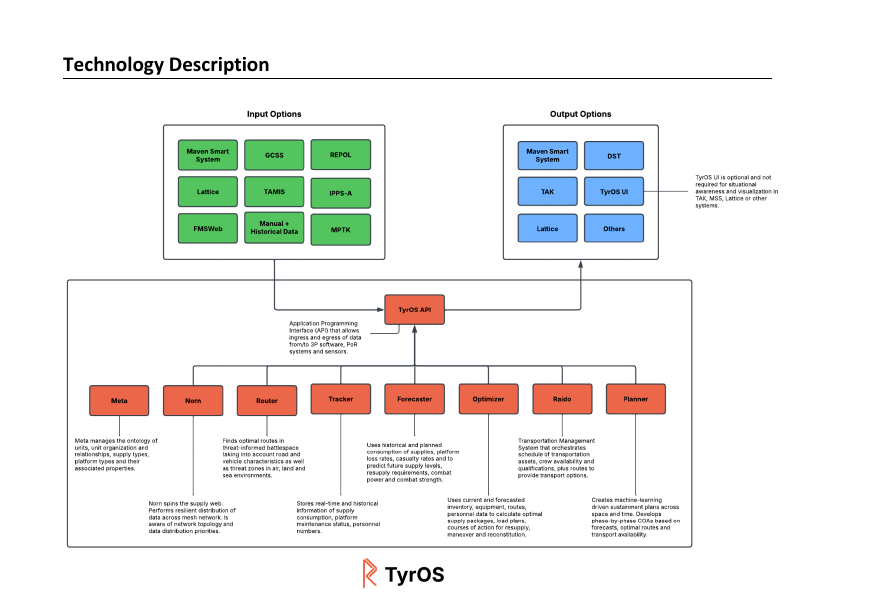
8 Core Modules
1️⃣ Meta (Ontology Layer)
Purpose: Foundational data layer for logistics entities and relationships
- Units (SRCs), supply classes, platforms (by LIN)
- DoD standards: NSNs, DODICs, OPCON/TACON/ADCON
- Sources: MTOE (dynamically updated)
2️⃣ Norn (Mesh Network)
Purpose: Decentralized P2P Layer 3 virtual network
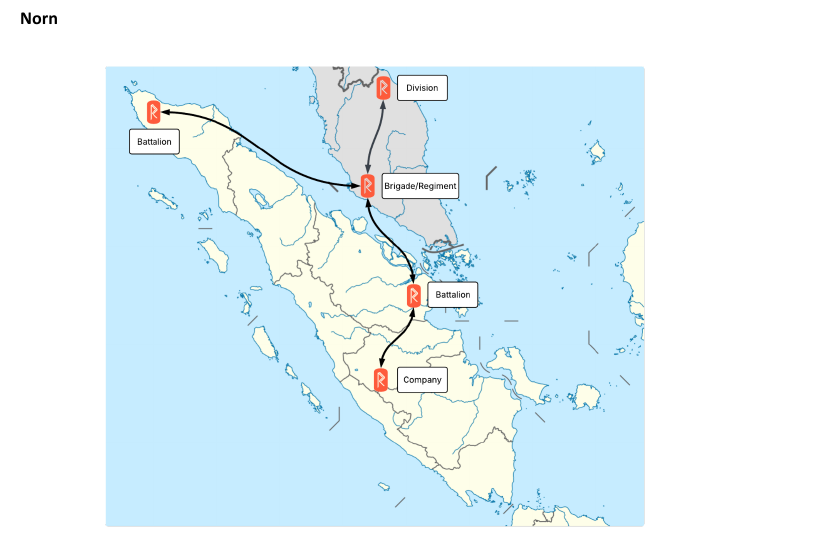
- Zero-trust: ECDH + AES-256-GCM
- DDIL-optimized: No centralized infrastructure
- Adaptive bandwidth, Zstandard compression
- Multi-hop relay, configurable prioritization
3️⃣ Tracker (Data Aggregation)
Purpose: Real-time + historical sustainment state
- Ingests LOGSTATs, PERSTATs, combat SLANTs
- Organizes by supply area (not strictly by unit)
- Hierarchical aggregation
4️⃣ Forecaster (Predictive Analytics)
Purpose: ML-powered supply/personnel forecasting
- ARIMA/SARIMA, LSTM, XGBoost ensemble
- Training: commercial inventory + synthetic military + curated LOGSTAT
- Online learning from live operations
- Edge-adaptable (CPU/GPU-aware)
5️⃣ Router (Geospatial Routing)
Purpose: Threat-informed mobility engine
- OpenStreetMap foundation
- Integrates MIDB, Maven Smart System threat overlays
- All routing data cached offline
- Multi-domain (land, air, sea)
6️⃣ Optimizer (Decision Engine)
Purpose: Solves Inventory Routing Problem (IRP)
- Methods: LP, MIP, Clarke-Wright, Simulated Annealing, RL
- Multi-constraint 3D bin-packing (cargo dimensions, weight, NEW)
- Multi-modal optimization
- Operational preference models
7️⃣ Raido (Transportation Management)
Purpose: Orchestrates logistics mission execution
- Full lifecycle: ad-hoc pull → pre-planned push
- Authoritative scheduler for transport assets
- GANTT/Kanban views with Sync Matrix
- Integrates GCSS, TCPT (personnel qualifications)
8️⃣ Planner (Sustainment Planning)
Purpose: Generates ML-driven COAs
- Leverages Army ST 4-2 planning factors
- Online learning via Tracker data
- Planning factors exposed via API/UI
- Configurable priority of support/supply
🔌 API Layer
HTTP REST API
- OpenAPI/Swagger documentation
- RESTful endpoints for all modules
- Standard HTTP/HTTPS transport
gRPC API
- Protocol Buffers for serialization
- High-performance binary protocol
- Bi-directional streaming support
SDK
- Client libraries provided
- Simplifies integration
- Handles authentication and retries
🚀 Deployment Architecture
Containerized
- Docker containers for all components
- Kubernetes orchestration
- Horizontal scaling support
Cloud-Agnostic
- AWS, GCP, Azure support
- FedRAMP High certified
- On-premise deployment capable
CI/CD Pipeline
- Nessus vulnerability scanning
- Aikido security testing
- Automated deployment workflows
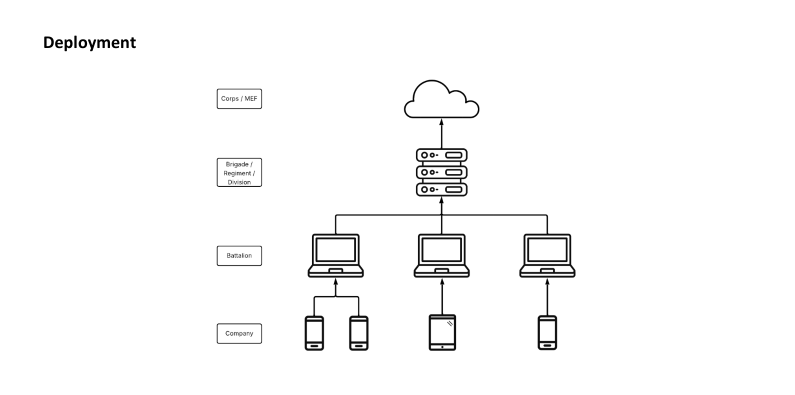
| Echelon | Hardware | Capabilities |
|---|---|---|
| Company/Battalion | Toughbooks, rugged laptops | Basic forecasting, routing, optimization, tracking in disconnected environments |
| Brigade/Division/Corps | Multi-core server blades, mobile data centers | Full TyrOS suite with high-fidelity forecasting and optimization |
| Stationary (with cloud) | Cloud-enabled configuration | Centralized compute/storage while interfacing with forward edge nodes |
🤖 AI & Agent Architecture
🧠 Saga (Generative AI Agent)
⚠️ Documentation Gap
CRITICAL: Saga is mentioned extensively (product tree, screenshots, investor update) but no technical architecture details provided in reviewed materials. This is a major gap for DD.
What We Know About Saga
- Publicly launched generative AI capability
- LLM-powered sustainment assistant
- Appears in product screenshots (chat interface, map integration)
- Mentioned as part of multi-product expansion (2026 investor update)
What We Don't Know (DD Must Ask)
- Which underlying LLM(s) power Saga?
- Guardrails against dangerous/wrong/hallucinated COAs?
- How do model updates reach 5 kbps edge nodes?
- Tool-calling architecture? Grounding mechanism (RAG)?
- Human-in-the-loop patterns?
📊 Forecaster (Predictive AI)
Model Ensemble
- ARIMA/SARIMA: Temporal trends, seasonality
- LSTM: Long-range dependencies
- XGBoost: High-dimensional sparse data
Training Data Lineage
- Commercial inventory + resupply datasets
- Synthetic military stockage scenarios
- Curated historical LOGSTAT data
- Platform damage/repair from real exercises (PERSTAT, combat SLANT)
Online Learning
- Ingests real-time LOGSTATs, combat SLANTs, PERSTATs
- Exponential Moving Averages smoothing
- Context-aware (scheduled events, mission plans, human guidance)
⚙️ Optimizer (Mathematical Optimization + RL)
Core Problem: Generalized Inventory Routing Problem (IRP) — optimizing over combined space of inventory management, transport routing, load planning across time, geography, and transportation modalities.
🌐 Edge & DDIL Architecture
✅ Offline-First Design Principle
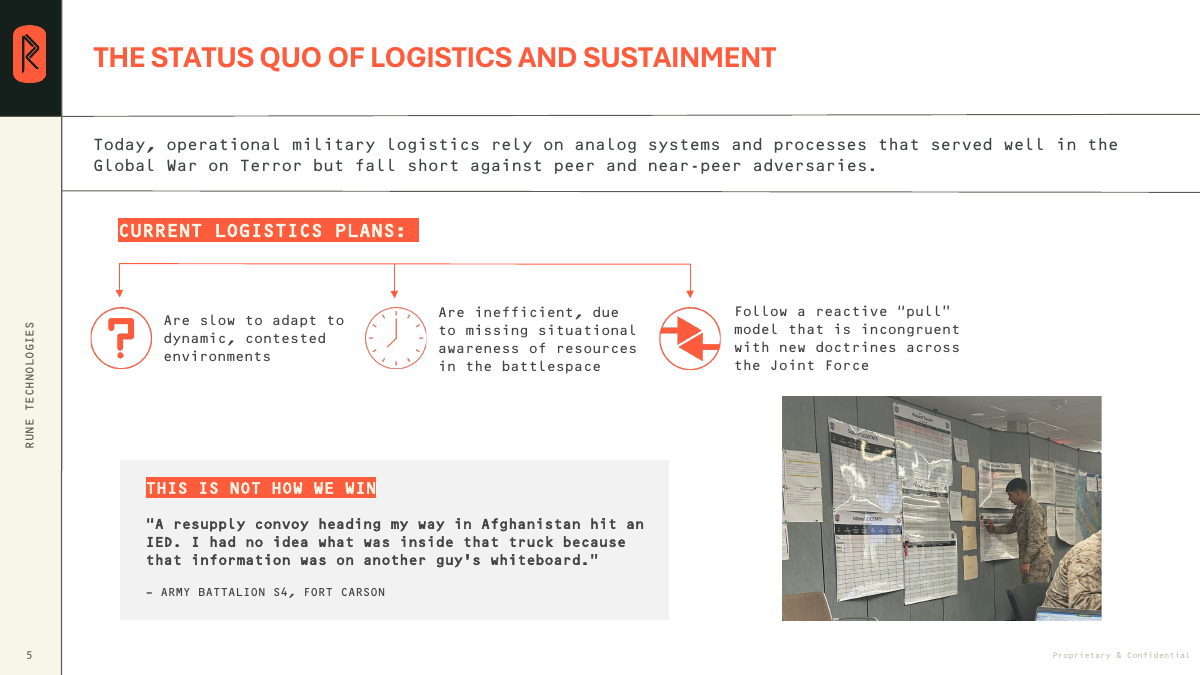
TyrOS is engineered for the tactical edge, caching critical last-known inventory, route, and vehicle data at edge nodes to enable disconnected operation with minimal resource use.
🔗 Norn Mesh Network Deep Dive
Network Architecture
- Peer-to-peer Layer 3 virtual network
- No centralized infrastructure dependency
- Multi-hop relay supported
- Zero-trust: ECDH key exchange + AES-256-GCM encryption
DDIL Optimizations
- Adaptive bandwidth: Transmits whatever conditions allow
- Zstandard compression: High ratios, low latency
- Configurable prioritization: Critical nodes/data types first
- Tracks transmission state: Resumes interrupted transfers
Prioritization Rules
- Network topology: Higher-echelon units receive updates before lateral units
- Data type: Platform readiness, supply changes sent ahead of lower-latency information
- No fixed bandwidth requirements: Fully adaptive
🔍 DD Critical Question
Has 5 kbps + mesh + auto-conflict-resolution been proven at scale (~15K+ personnel, hundreds-to-thousands of nodes) with some isolated for days, then reconnecting cleanly — in real operations?
Materials show 1CD, 25ID production use but scale validation details unclear.
📦 Scale Adaptation by Echelon
Company/Battalion Level
Toughbooks, rugged laptops — basic forecasting, routing, optimization, tracking in disconnected environments
Brigade/Division/Corps Level
Multi-core server blades, mobile data centers — full TyrOS suite with high-fidelity forecasting/optimization
Stationary Units (Cloud Connectivity)
Cloud-enabled configuration — centralized compute/storage while interfacing with forward-deployed edge nodes
📊 Traction & Deployments
🎯 Pipeline Breakdown
🏆 Major Contract Wins
$99M Army Enterprise Agreement
5-year standing contract vehicle usable across Joint Force. Most critical — provides scalable acquisition pathway reducing contracting friction.
Signed July 20261st Cavalry Division
Production deployment. Testimonial: "TyrOS proved critical to generating accurate shared understanding and visibility of commodity and combat power."
Production25th Infantry Division
Production deployment. TyrOS used end-to-end (not as dashboard, but as the system through which logisticians operate).
ProductionUSMC Project Dynamis
C2 modernization program. PACOM Balikatan 26 exercise with extremely positive reviews. Phase 2 follow-on with Warfighting Lab.
Active🎖️ Key Validation Points
- First "SOF-peculiar" sustainment C2 application — validated at SOF Week
- GCSS-Army write-back approval nearing completion (property accountability integration — significant vote of confidence)
- 4th Infantry Division joining post-PCC6 (Project Convergence Capstone 6)
- 1CD contract plus-up in negotiation (more than doubling contract value)
📈 Growth Trajectory
| Metric | 2025 (Actual) | 2026 YTD (July) | 2026 Target | 2027 Forecast |
|---|---|---|---|---|
| Revenue (Closed/Won) | $1.5M | $13.3M | $32M | $46M |
| Revenue (Weighted Forecast) | — | $15M | — | — |
| Total Pipeline | — | $114M | — | $270M |
Cash on Hand: $23.3M (June 2026)
Monthly Burn: $1.66M (~70% payroll)
✅ Key Recommendations
🎯 Top 5 Priority Questions for DD Session
1. Saga Architecture (CRITICAL GAP)
Request full technical architecture: LLM stack, tool-calling, grounding, guardrails. This is completely undocumented.
2. Scale Validation
Has 5 kbps mesh + CRDT been proven at 15K+ personnel with multi-day disconnects in real operations?
3. Salesforce Data Integration
Can TyrOS data model integrate with Data Cloud? Event streams? Stable identifiers for Agentforce agents?
4. CRDT Implementation Details
Custom or 3P? Scalability testing? What happens under network partition?
5. Customer Reference Calls
Direct access to 1CD, 25ID users for unfiltered feedback on production experience.
✅ Final Recommendations
🎯 Recommendation
Add 7 new sections (H-O above) and augment existing sections with questions on:
- Data export formats
- Saga tool-calling architecture
- Network partition handling
- Customer reference calls (direct 1CD, 25ID user feedback)
This would elevate the DD agenda from "comprehensive technical audit" to "acquisition-ready diligence covering technical, operational, strategic, and integration dimensions."
🚩 Red Flags to Investigate
- Saga architecture completely undocumented — major gap for a product that's "publicly launched"
- No IL5/IL6 ATO provenance — materials reference these environments but provide no ATO details
- Scale validation unclear — 1CD/25ID production use documented, but has mesh been proven at 15K+ personnel scale with multi-day disconnects?
- CRDT implementation not detailed — conflict resolution is make-or-break for DDIL; needs deep technical validation
- No SBOM, no open source licensing details — critical for acquisition risk assessment
- No current vulnerability status — materials mention scanning tools but not current vuln count
💚 Green Flags (Strengths)
- Production deployments with Army divisions — not just demos/experiments
- GCSS-Army write-back approval — significant trust signal (property accountability integration)
- First "SOF-peculiar" C2 application — differentiated positioning
- Modular, containerized architecture — clean separation of concerns, cloud-agnostic
- Offline-first design principle — architected for DDIL from day one (not bolted on)
- Strong leadership pedigree — JSOC + Anduril DNA, proven operators
- 50% military veterans, deep domain expertise — understands the customer
- $99M Enterprise Agreement — scalable acquisition vehicle reduces friction
🎯 Priority Artifacts to Request in DD Session
1. Live Demo
Disconnected operation and reconnection (mesh resilience) — must-see for validating DDIL claims
2. Capability Maturity Matrix
Module-by-module breakdown (GA vs. beta vs. roadmap) for all 8 TyrOS components + Saga/ADK/TyrSense
3. Architecture Diagrams
Edge/cloud topology, data flow, hierarchical replication model, conflict resolution strategy
4. Saga Technical Architecture
LLM stack, tool-calling, grounding mechanism, guardrails — major documentation gap
5. CRDT Implementation
Custom or 3P? Scalability testing results at 15K+ personnel scale?
6. Performance Benchmarks
COA generation time, mesh latency under bandwidth constraints (5 kbps, LTE, SATCOM)
7. SBOM
Open source usage, licensing exposure, copyleft contamination risk
8. Vulnerability Report
Current open vulns, severity, remediation timeline
9. IL5/IL6 ATO Documentation
Authorizing agency, scope, expiration dates — critical for classified deployments
10. Customer Reference Contacts
Direct 1CD, 25ID user feedback (unfiltered)
11. Data Model Schema
Published schema/entity model for sustainment objects — Salesforce integration critical
12. Scale Testing Results
Has 5 kbps + mesh + auto-conflict-resolution been proven at 15K+ personnel scale with multi-day disconnects in real operations?
📄 Document Metadata
Generated: August 2026
Project Codename: Rampart
Classification: Salesforce Internal / Acquisition-Sensitive